Exercise"Three Chairs"
The “Three Chairs” exercise is when we try to look at the same situation from three perspectives:
・On the first chair we look at the task rationally, everything is standard, the way you are used to thinking, pondering
・In the second chair, we let our imagination run wild – we take into account everything that comes to mind, even the most improbable.
・On the third chair we make friends with rationality and fantasy to invent a third, unique strategy.
The exercise is suitable when you need to find an unconventional, creative solution.

Exercise "Balance wheel".
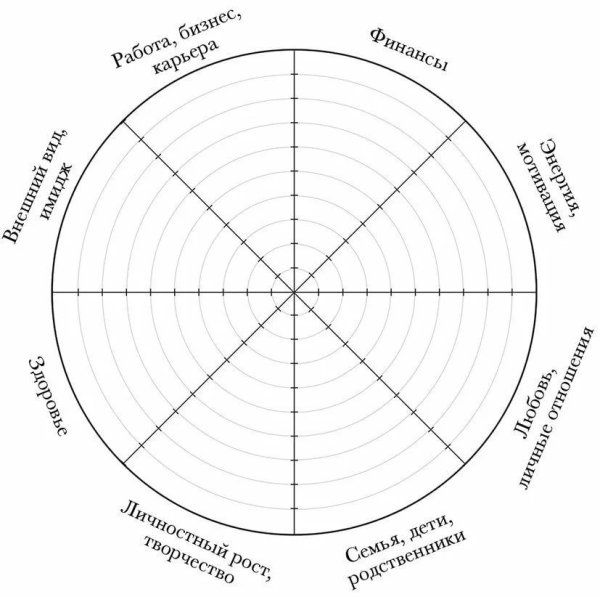
Divide your life into areas of life that are important to you: work, relationships with your partner, with your children, health, beauty, leisure, etc. – It is more effective to do it on a piece of paper.
・For each area, give yourself scores from 1 to 10 for how satisfied you are with what is going on, where 1 is bad and 10 is great.
・Then ask yourself the question for the areas with the lowest scores, “What can I do to improve my scores to at least 8-9?”.
It’s a great way to get a bird’s eye view of your life, see the big picture and spot the blind spots.
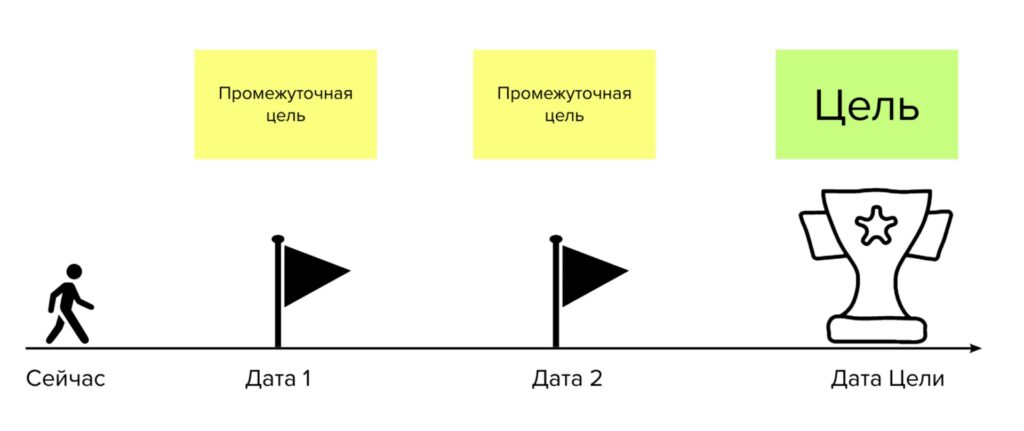
Exercise "Time Line"
For situations when you need to implement some complex and time-consuming tasks, such as filing documents somewhere or registering a sole proprietorship. If the task is linear and the steps follow each other. You divide the main big goal into intermediate ones, determine the dates of their achievement and move according to this line.
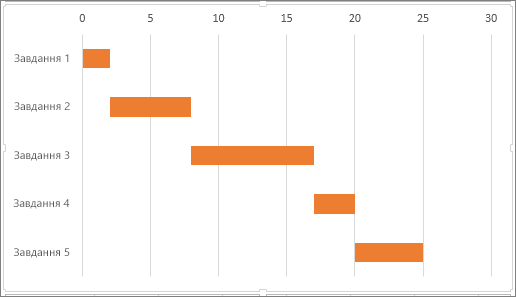
Gantt chart
It is suitable if there are many small tasks that can be done in parallel. Draw a coordinate axis: vertical column – tasks, horizontal – time schedule (dates) and at the intersection points you distribute things by numbers. Very effective exercises for large, large-scale tasks, thanks to which you will definitely not forget anything and will do everything in time without confusion and panic.
Practices to improve self-esteem.
The importance of adequate self-esteem is based on the fact that it is one of the necessities of human existence. Yes, it is not the need for food, water or air, but nevertheless, it is not easy for a person with low self-esteem to survive in the world. Most probably, he will not perish, but his vitality will be significantly undermined.
Healthy self-esteem:
– contributes to the life process;
– increases chances of survival;
– is integral to normal and healthy development.
One of the most unpleasant consequences due to low self-esteem is fear. Fear is a truly destructive feeling. If we let fear rule our lives, it is as if we close ourselves off from reality. We are afraid of falling, but we are also afraid of ups, we are afraid to finish some important thought, because then we will have to face reality. And it is not what we would like it to be. Such a collision is painful and destructive. All this comes from the fact that our self-esteem is at a critically low level. Ways to improve self-esteem So, having realised that our self-esteem is one of the powerful engines of life processes, we decided to seriously engage in its recovery and growth. To begin with, we need to realise that nothing is going to change on the spot. To raise self-esteem it is important to take action. Not theory, but practice. The author of the book, on which I will rely in the description of practices, and calls the recommendations for working on self-esteem “practices”. The level of self-esteem is raised through the volitional act of the individual.
Nathaniel Branden offers these six methods for increasing self-esteem:
– the practice of mindful living.
– the practice of self-acceptance,
– the practice of self-responsibility,
– the practice of self-affirmation.
– the practice of purposeful living.
– The practice of personal wholeness.
It is quite possible to work with these methods on your own. But you need a good push and direction, which you can get in working with me. Let’s look at a few reflective practices that help you move in the right direction. When doing these practices, it is important to be in a quiet place, focus on yourself and your feelings.
1. Practising mindfulness
Almost every spiritual teaching says that people live their lives “on autopilot”. Because of this, they do not notice important events, cannot make the right decisions, and in general, are as if in a dream. It is impossible to be an intelligent, competent and competent person and still be in a “mental fog”. The mind is our main tool for survival. Betray the mind and self-esteem suffers. As an example, the author cites running away from unpleasant events and facts: “I’m not doing my job very well, but I can’t think about it”, “my marriage is falling apart, but maybe it will work itself out”. It won’t if we don’t work on the level of mindfulness. Every time we choose to think clearly and with clarity, we build a healthy personality with the right self-esteem.
An exercise for practising mindfulness.
The sentence completion exercise is a deceptively simple but uniquely powerful tool for understanding yourself, increasing your self-esteem and personal effectiveness.
The essence of the exercise is to write down an unfinished sentence, and then add different endings to it. The only requirement is that each ending must grammatically match the base of the sentence. You must find at least six endings.
• Living consciously for me means…
• If I act five per cent more consciously today.…
• If I pay 5 per cent more attention today to how I communicate with people…
• If I'm 5 per cent more meaningful in my most important relationships.…
Analyse these suggestions at the end of the day. Complete the suggestions and see how your life changes over the next three weeks.

2.The practice of self-acceptance.
Self-acceptance, figuratively speaking, is the refusal to go to war with oneself. A basic attitude of self-acceptance is what a real therapist seeks to awaken in a person even with very low self-esteem. Such an attitude can inspire the realisation of the main inner problem, so that the patient does not in doing so begin to hate himself, deny his value as a person or kill the will to live. “I will value myself, treat myself with respect, and assert my right to exist.” Self-acceptance is the refusal to view a part of yourself, be it body, thoughts, emotions, as an alien “not-self”. You must be willing to tell yourself that any emotion and its expression, is also a part of you. Take yourself for granted and accept the reality that you are in. You must treat yourself with compassion. This does not mean that you have to feel sorry for yourself or allow yourself to do wrong.
An exercise for practising self-acceptance.
Just as in the first exercise, you need to complete the sentences:
• Self-acceptance means to me…
• If I accept my body more.…
• If I'm denying and rejecting my body…
• If I'm more accepting of my conflicts…
• If I deny and dismiss my conflicts…
• If I'm more accepting of my feelings…
• If I deny and reject my feelings.…
• If I'm more accepting of my thoughts…
• If I deny and reject my thoughts.…
Read what you have written down and analyse your emotions.

3. Practising self-responsibility
Man needs to be in control of his life to feel happy. To feel that he is able to take responsibility for his existence. Responsibility to oneself is expressed in many ways, for example:
- I’m responsible for making my wishes come true.
- I am responsible for my choices and my actions.
- I am responsible for the level of mindfulness I bring to my work.
- I am responsible for the level of awareness I bring to my relationships.
- I am responsible for my behaviour with other people: employees, colleagues, customers, husband or wife, children and friends.
- I am responsible for the way I manage my time. I am responsible for the quality of my communication.
- I am responsible for my own personal happiness.
What does each of these points mean? Only that we are responsible for our own (un)happiness. The world and people around us do not owe us anything. If we need partners and helpers, we ourselves should take the initiative to find them. In general, passivity and self-responsibility are not compatible. Passivity and high self-esteem are incompatible.
An exercise for practising self-responsibility.
Finish the sentences:
• Being responsible to myself means to me…
• At the thought of taking responsibility for your own existence.…
• If I were to accept responsibility for my existence, it would mean…
• If I take 5 per cent more responsibility for achieving my goals…
• When I avoid taking responsibility for achieving my goals…
• If I took more responsibility for the success of my relationship.…
• Sometimes what keeps me in a passive state…
These are just three exercises, there are actually many more, but the point is to go through all these reflections through your feelings. To try to change where your emotions are telling you that something is not working. I'm a specialist in working with self-esteem and self-confidence. I can say with the confidence of someone who has worked hard to raise the levels of these indicators that it is very life-changing and opens many previously seemingly closed doors. Good luck to you.

Practice for the development of SEXUALITY.
I am a counselling sexologist and I work a lot about sexuality as a basic quality for self-confidence, self-knowledge and self-esteem. Everyone has a different understanding of their sexuality, and sometimes a woman does not notice all the many facets of sexuality. We hide under all locks what has long wanted to be seen and realised. This exercise I use in sessions, here is a deep work with the subconscious . But you can gradually unfold your feelings and knowledge about yourself with the help of these questions, you can deepen them, and it will be great if you write them down.
Exercise 1. "My sexuality."
1. Find an object that represents your sexuality, it can be anything. There are no exact terms.
2. Talk about yourself - the subject in the first person. "I am Anna's sexuality…
Questions:
- Tell me about yourself..
- How's life treating you?
- Where do you live?
- How does your mistress/owner treat you?
- How do you feel about that?
- What do you like?
- What are you to her/him for?
- How did you appear to her/him?
- What do you want, like sexuality?
- What do you want, for your master/mistress?
- What would you wish for him/her?